Fabrics and the way they are developed have never been more important than today. With the rising cost of raw materials, making a decision to invest in expensive clothing is now more dependant on the quality of fabrics used to create the clothes we wear today.
When I think about exceptional fabric development, whether that’s today or 40 years ago, my mind goes straight to Stone Island. There’s no better brand to use as an example when it comes to pushing boundaries of materials to achieve unique finishings and to create longevity in clothes.
In today’s letter, I linked up with Stone Island to do a deep dive on their new NO SEASONS collection, and how they continue to push the boundaries of fabric development through material experimentation.
NO SEASONS is a new chapter from Stone Island that draws from the original project created by Massimo Osti that was first introduced in 1989. To continue his legacy, Stone Island looks back into the history to bring back NO SEASONS with the focus on timelessness that’s reimagined through forward design.
The collection focuses on fabrics that are meant to be worn during any season. To really capture that idea, Stone Island took a single outerwear style that is realized in six different fabrications: Tela Resinata, Nylon Prismatico-TC, Raso Gommato, David-TC, Crinkle Reps NY, and Panno.
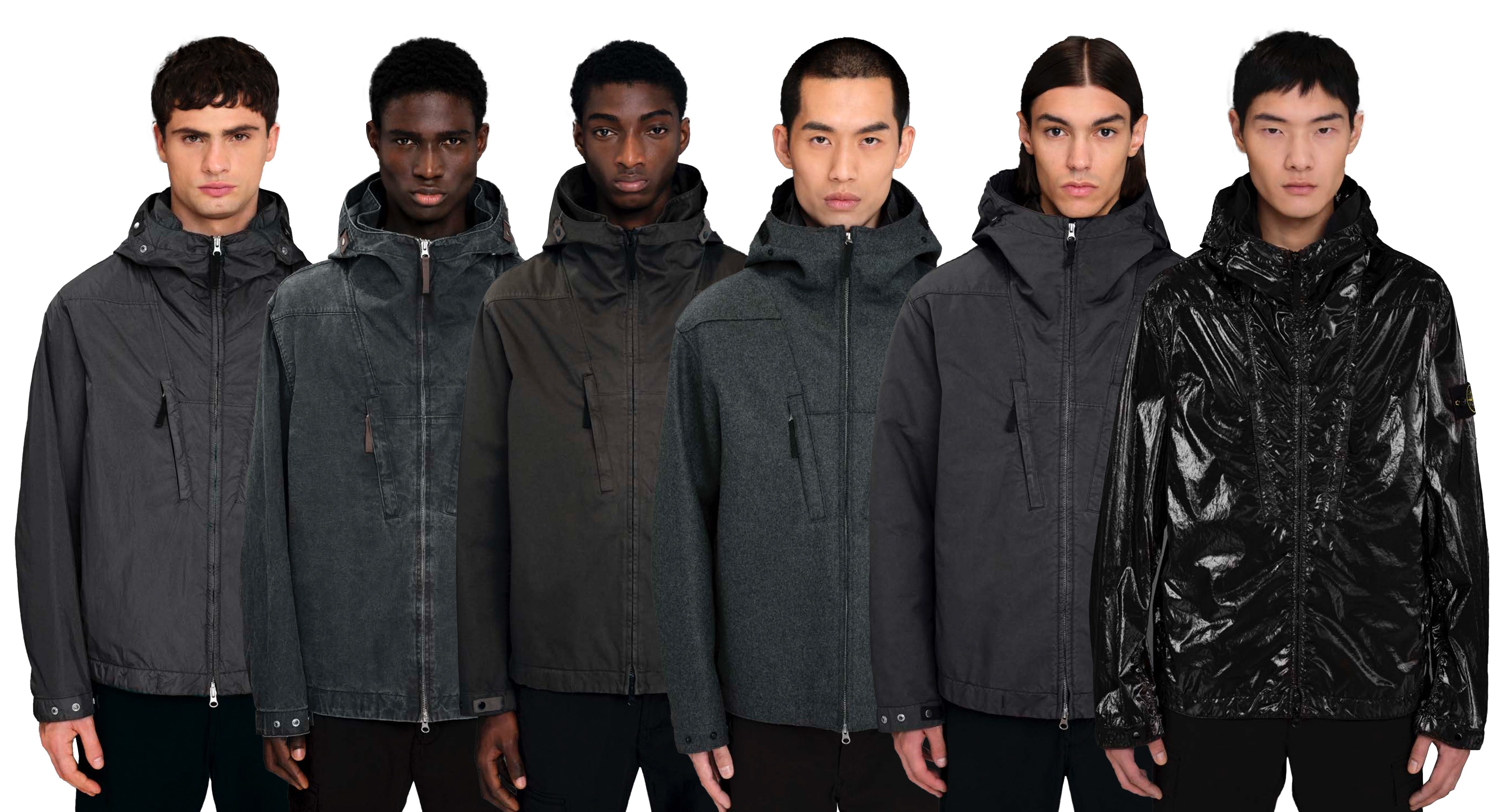
I think what’s really interesting is how Stone Island uses these materials to showcase their evolution not just as a clothing brand but as a science. These fabrics go through extreme levels of research and development that are then turned into products that you can enjoy for the rest of your life.
For Stone Island it’s not just about how something looks and performs in various situations, but the longevity of each garment. From what I’ve gathered after speaking to various people on the team, it’s extremely important for their customers to enjoy their products for the rest of their lives, and that’s shown across the wide range of clothes that Stone Island puts out to this day.
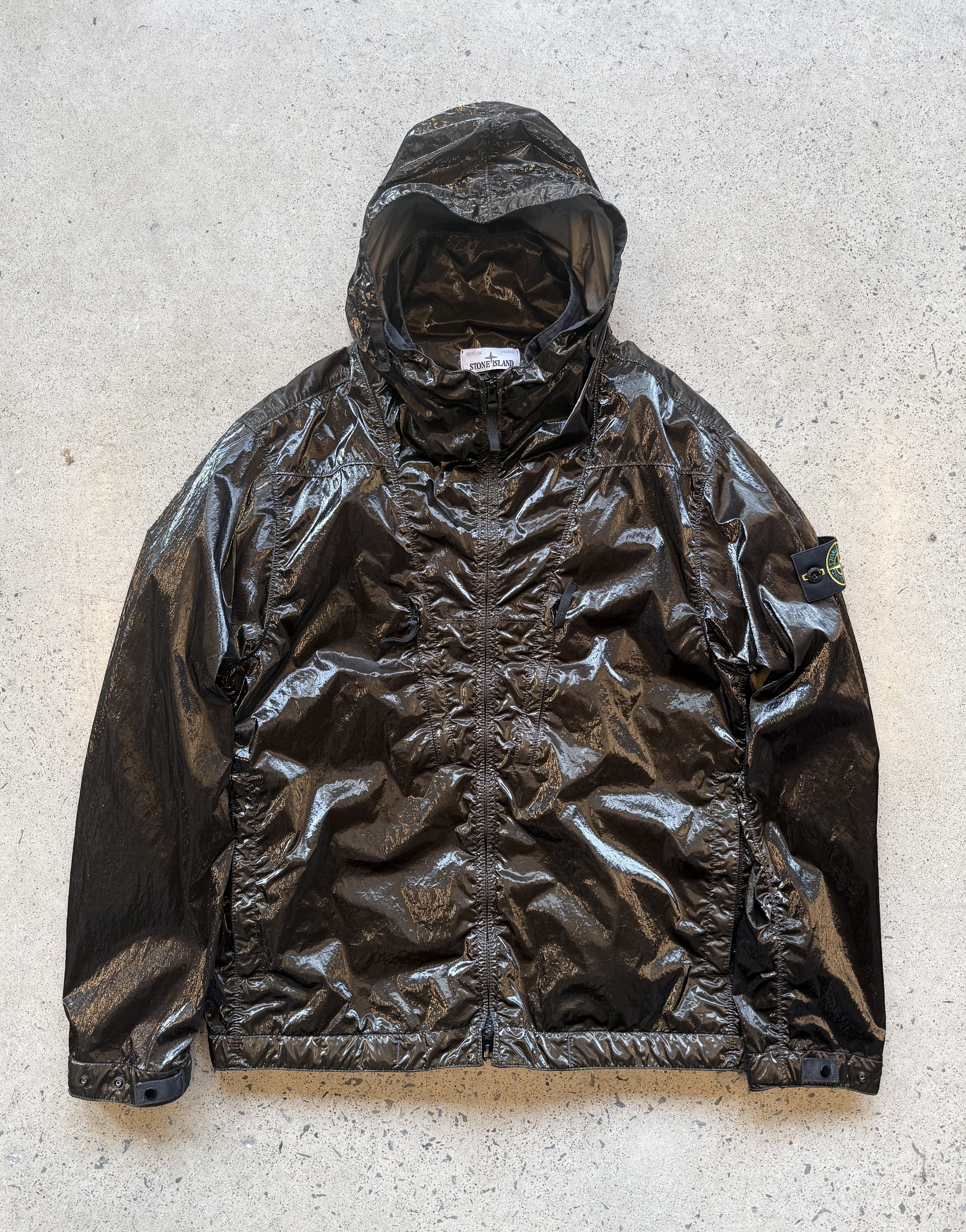
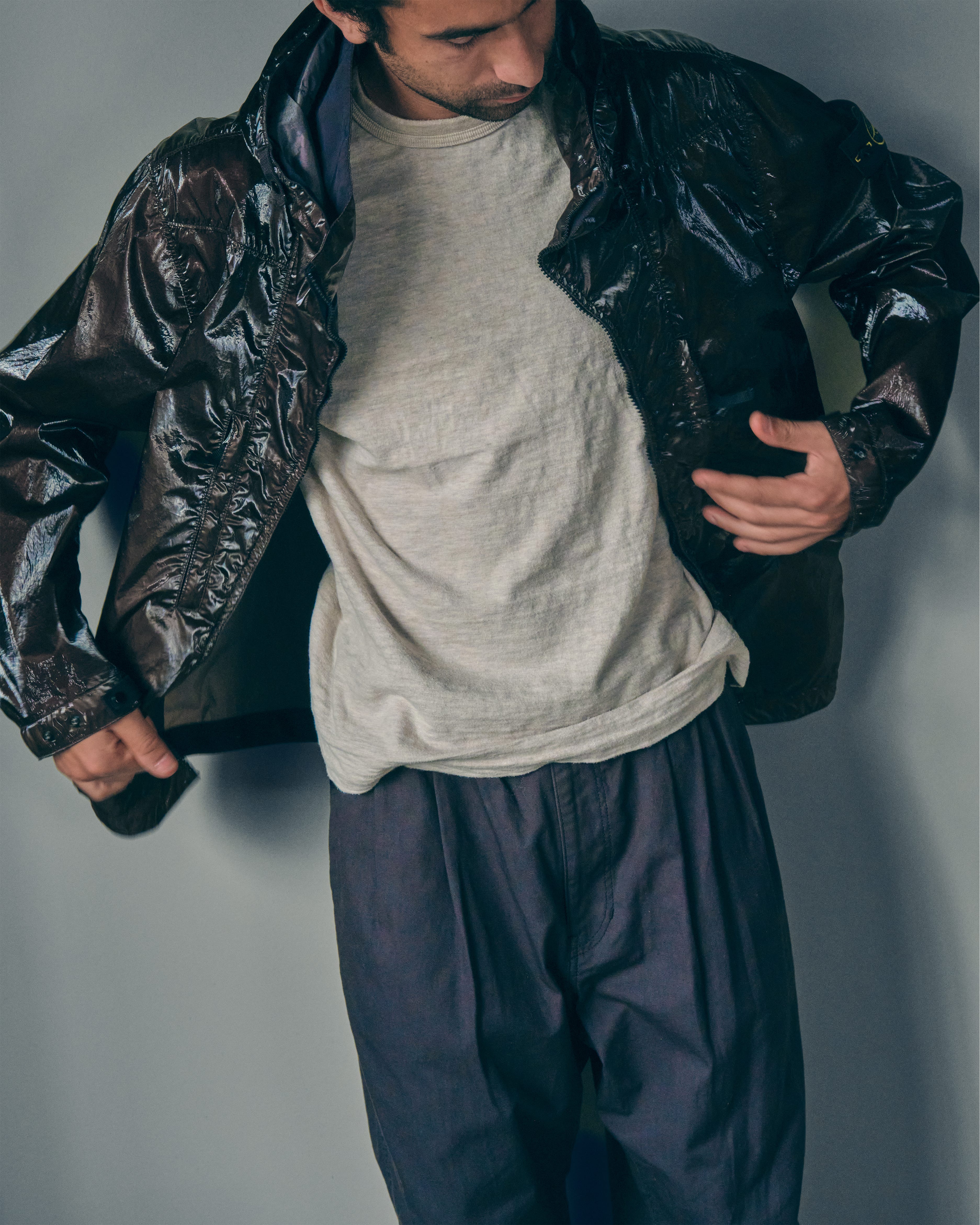
I got a chance to see one of these jackets in person, wear test it, and shoot some photos to really understand how special the fabric of the Prismatic Nylon-TC really is.
I’ve had the pleasure of owning multiple Stone Island garments from various decades, and yet I’m still left amazed at how the brand continues to push forward, continuously innovating while leaning into the history of the brand in order to hold true to its roots.
We’re going to dive more into the jacket in a second, but I think it’s best to first visually experience what the Lightweight Nylon Tela — a high-density technical fabric developed by Stone Island — is really all about:
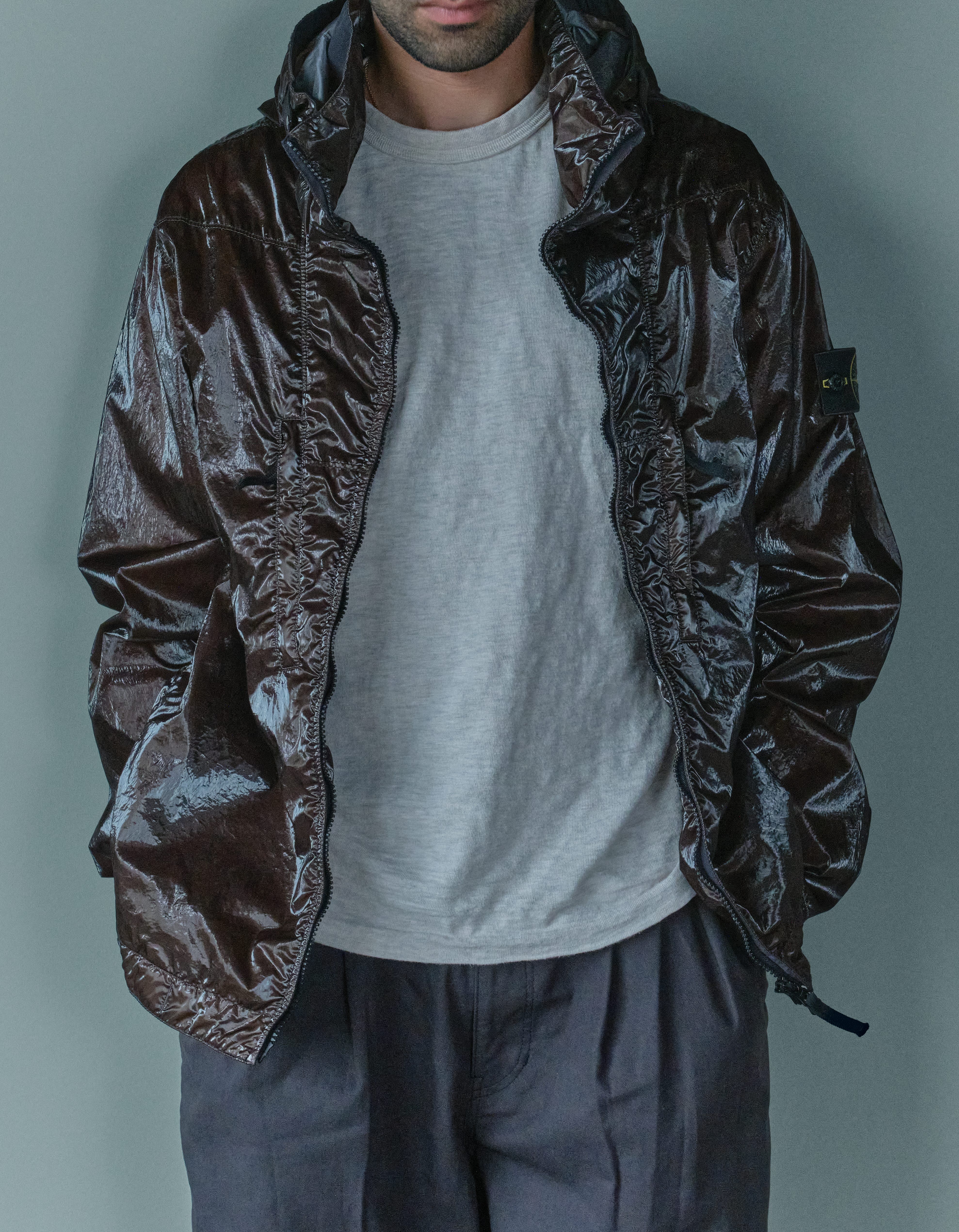
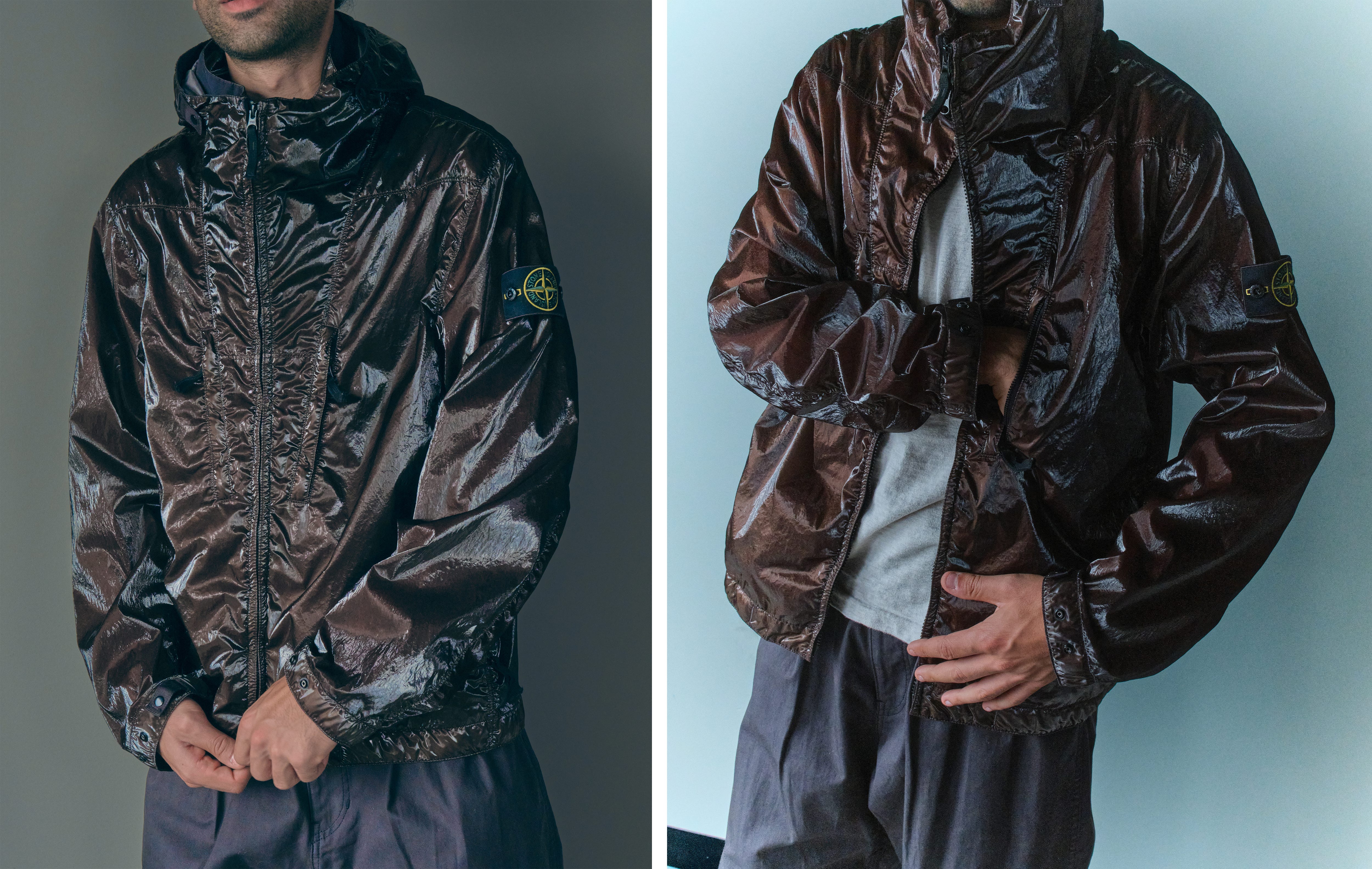
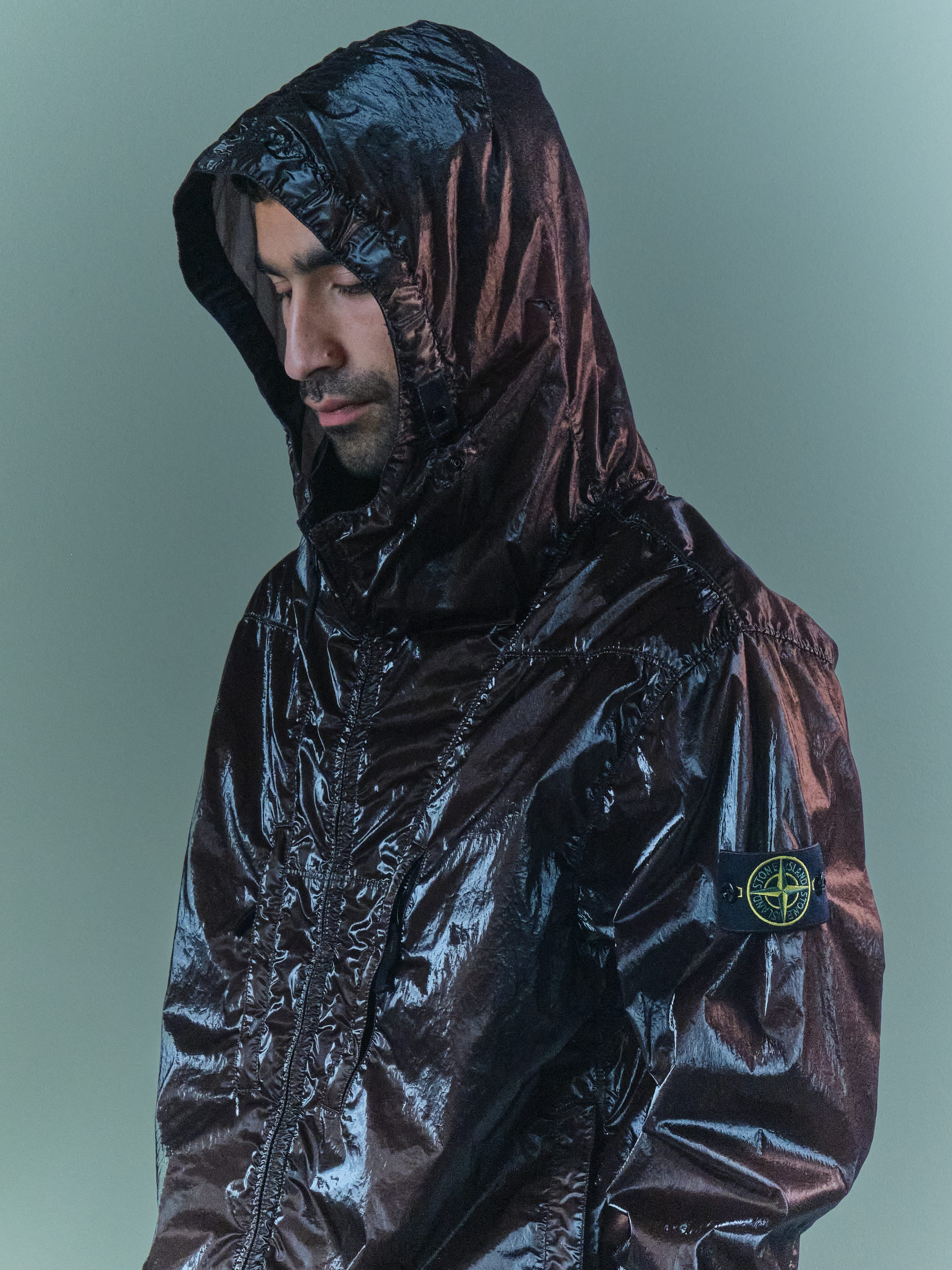
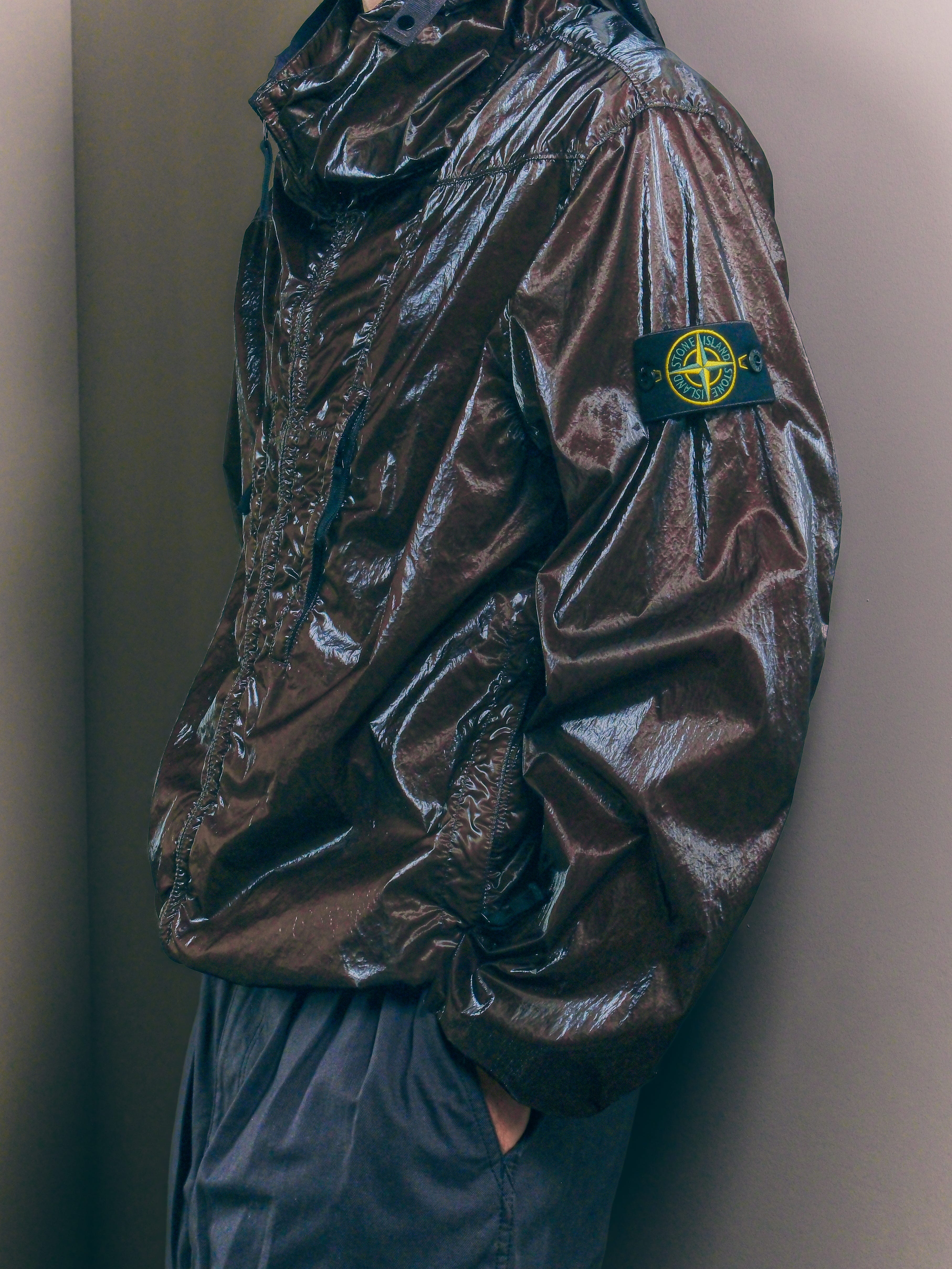
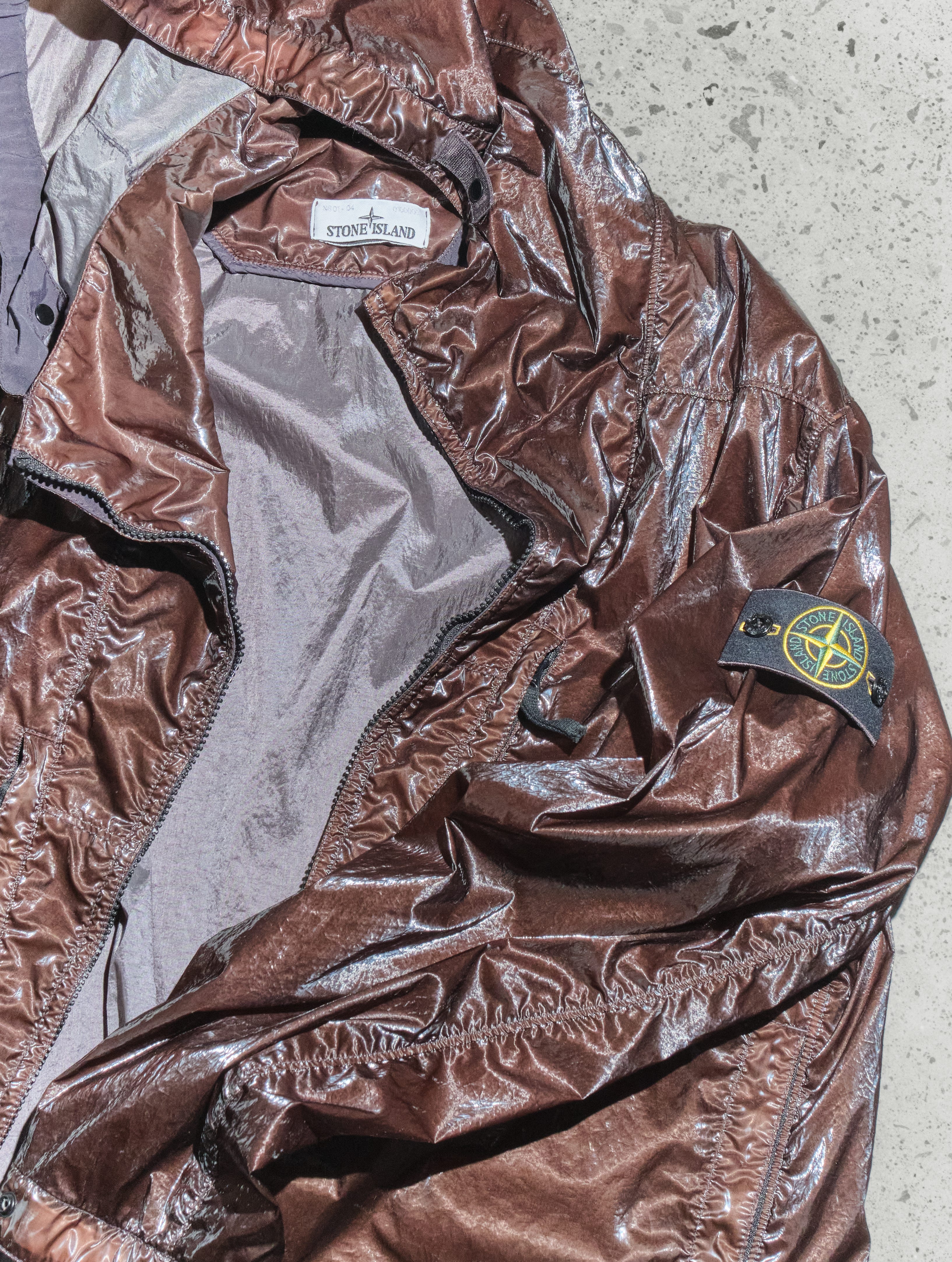
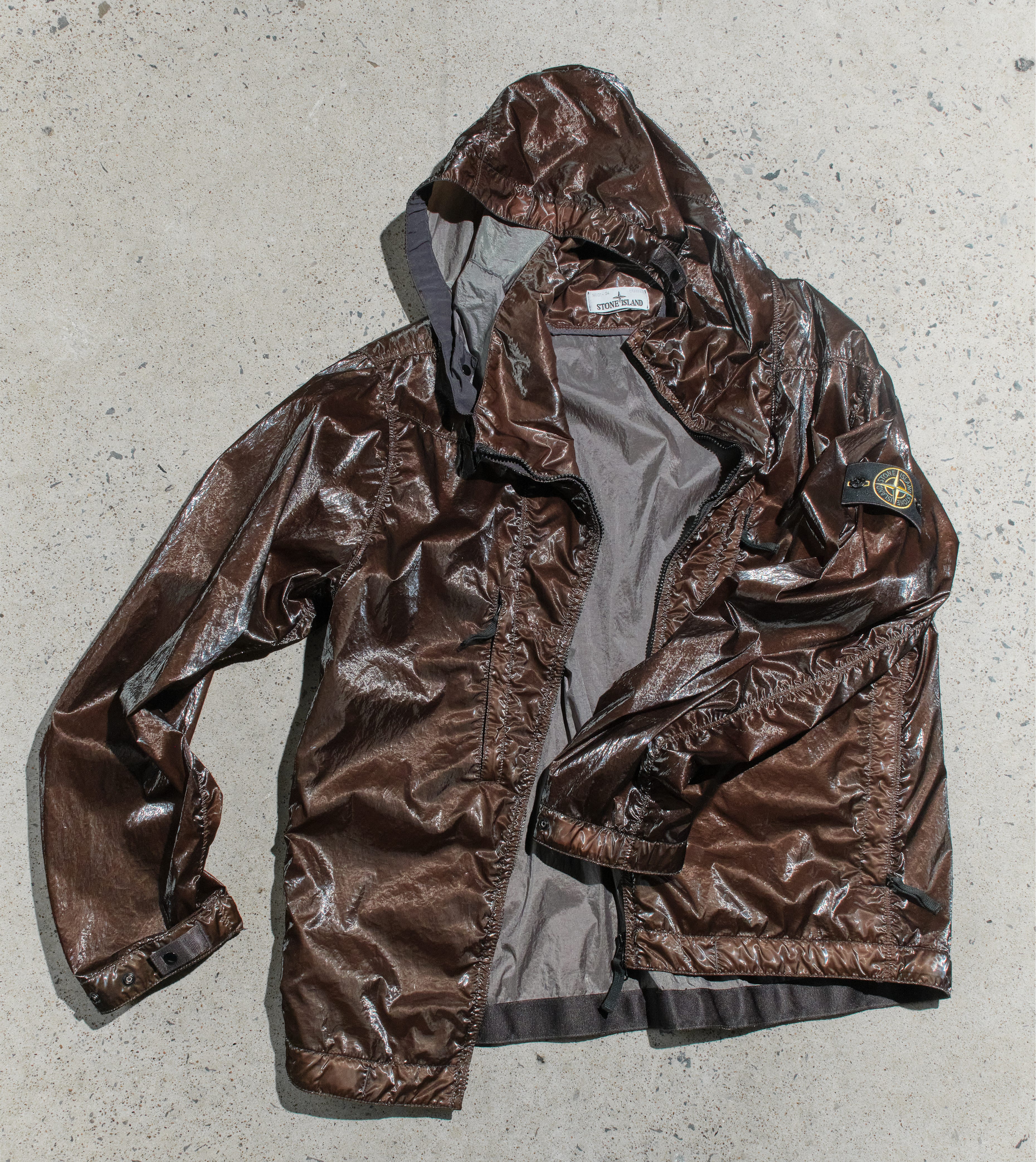
You might notice the various color and shade differences throughout the editorial, and that’s because the fabrics properties are designed to reflect under different lighting, giving it the appearance of various shades of color under specific lighting.
So, how does it create this specific effect?
The techniques that go into achieving this takes serious research, technology, and experience, and is honestly beyond my comprehension in some ways, and that’s because it requires actual science to truly understand the process that goes into creating the final look of the Lightweight Nylon Tela.
The same Nylon Prismatico fabric was used in the latest Stone Island x New Balance collection. Same effect, different dyes.
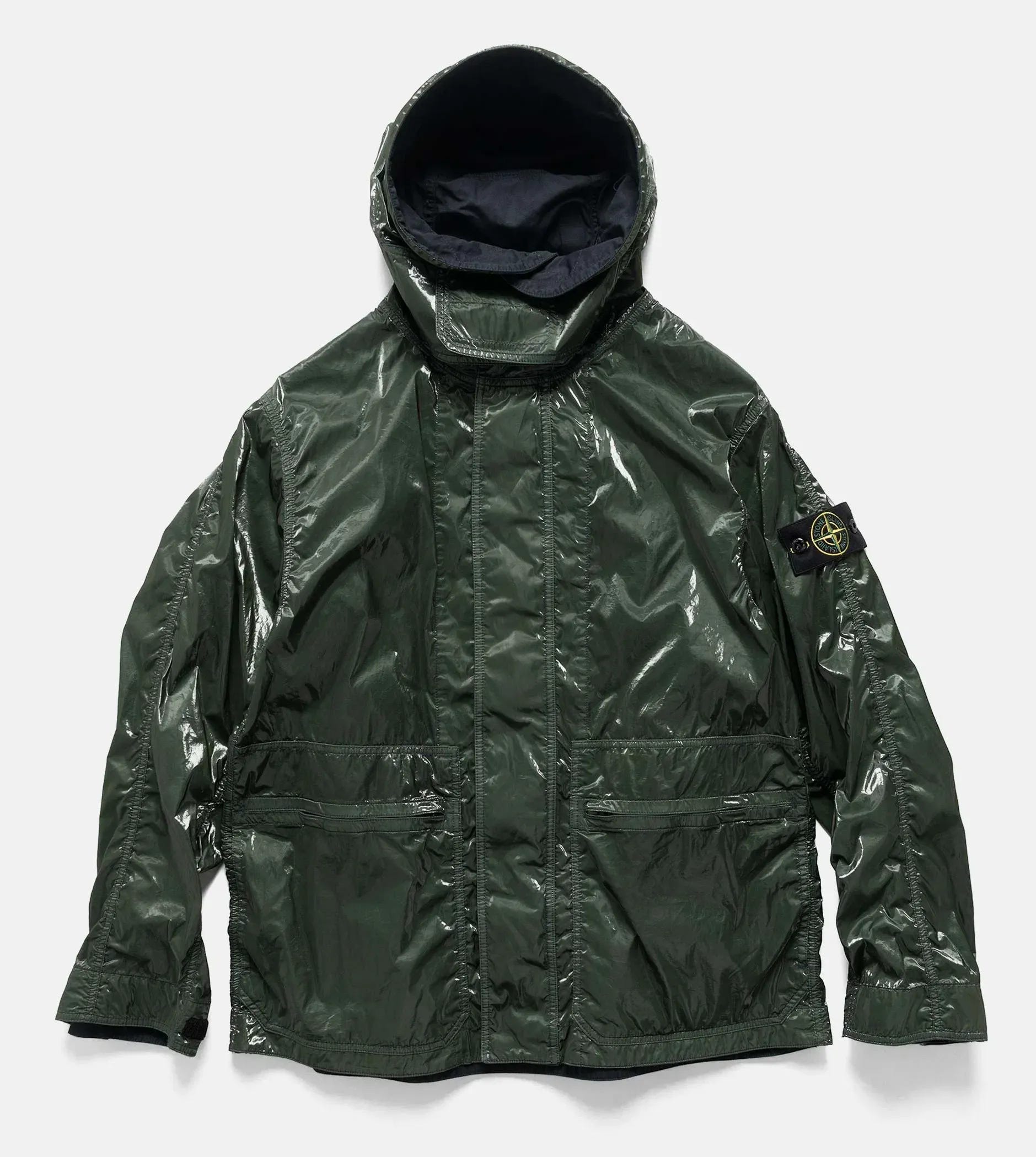
The Lightweight Nylon Tela is bonded to a glossy transparent polyurethane film, which gives it wind and water resistant properties — what’s interesting is when I first saw this jacket I assumed that the nylon was going to make noise with movement, but that wasn’t the case at all.
The garment dyeing process paired with the fabrics unique composition comes together to create the varied shades of color that are articulated through different lighting. The film’s light refracting texture refracts light that enhances the chromatic effects of the dye, giving it that liquid shine finish that comes off in a three-dimensional appearance.
During a conversation with the team Stone Island, I learned more about why they chose nylon as the base, referencing the history of Massimo Osti’s work, and the testing required to make a project like this happen.
“We selected nylon because it gives a more performance and contemporary approach to the finish rather than the silk or cotton, but also to provide strength and stability to the material.”
“A thing that we really like doing is working with ingredients that we can mix and evolve to create different interpretations of fabrics.”
The techniques and the base fabrics used to continue the evolution are rooted in Seta Prismatico — an archival technical fabric line that was first introduced around the Spring/Summer 2007-2008 collections.
What I found interesting is that although techniques from the Seta Prismatico were taken as the inspiration to continue to push the evolution for the Nylon Prismatico-TC, this new fabric for NO SEASONS is not directly taken from the Stole Island archive, but instead are new designs that respect the history of the brand through new experiments, techniques, and designs.
“Even from a graphic language and ideas point of view, specifically for NO SEASONS, we thought that the first function that Massimo first developed was already extremely balanced. We’re just trying to make it even more contemporary today to pay respect and homage to what his design process and his innovation and modernity was already at the time.”
But why nylon over cotton or silk? The team aims to create garments that will last a lifetime. Nylon and the polyurethane melts better together during the development process — this improves and pushes the boundary in a long lasting product that is going to last even longer than the cotton or silk versions.
The nylon maintains its finish while remaining wind and water resistant much more effectively.
None of this is simple to achieve though, as numerous tests with suppliers, dyeing facilities, and trial and error through various stages take place before the final product is ready to be enjoyed by you and me.
“A lot of testing through the supplier, with the supplier, with the material, but also with the dyeing facility. There are layers of complexity, it’s not just the fabric, the dyeing process, the trims, the accessories. There are multiple elements that actually can go wrong during the dying process and during the creation of the garment that require us to test everything.”
I think that’s the most important part of buying into a premium piece from a brand like Stone Island: you’re buying technology that has been rigorously tested to achieve certain effects that make all of their outerwear special and unique.
You’re not just buying a jacket. You’re buying into ideas, history, and a science that all come together for you to enjoy a garment that doesn’t look like anything else out there.
To me, that’s worth every dollar.
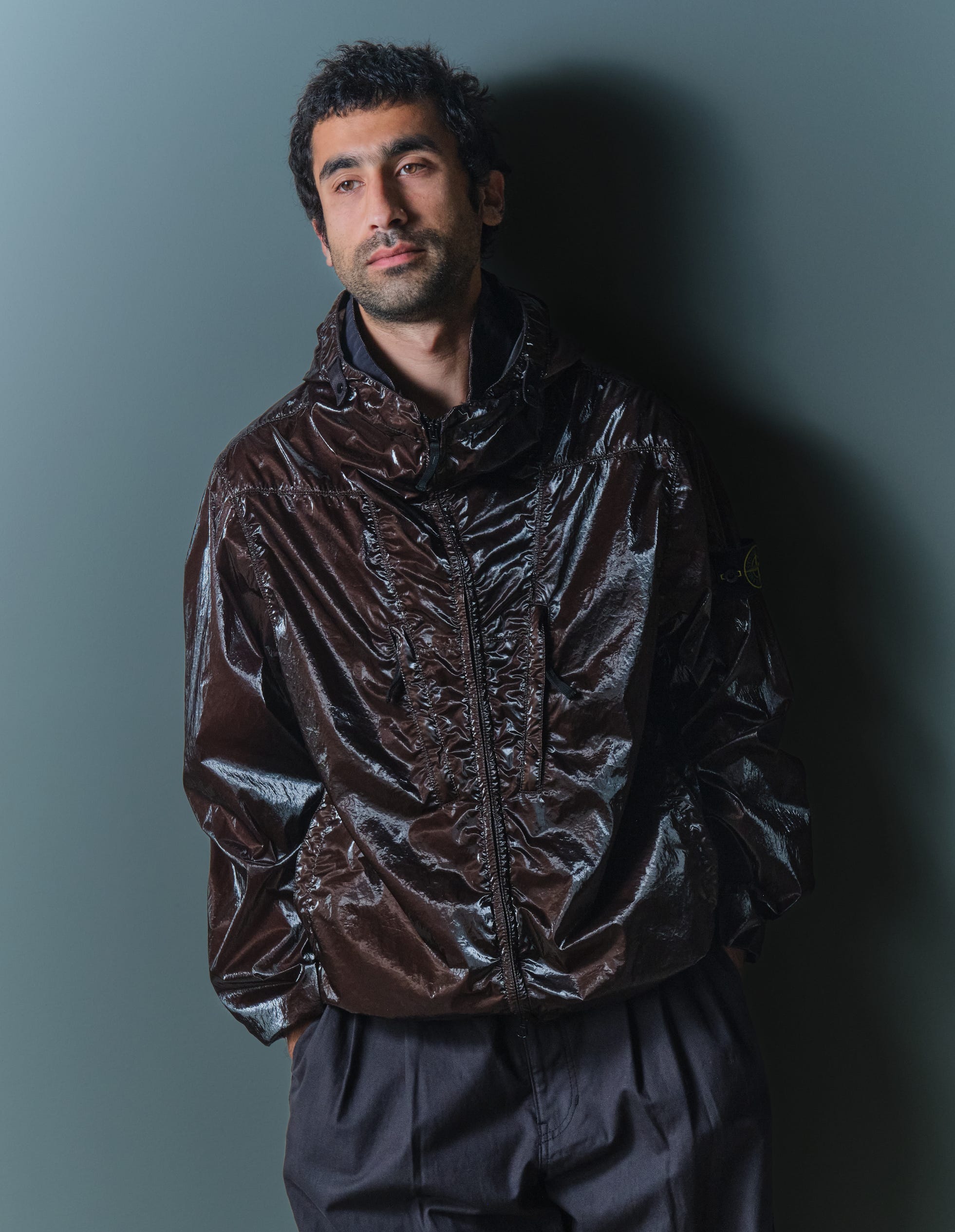
Technical things aside, this jacket just looks incredibly cool in person as it does in the photos you’ve seen today. Going with your true size for this is the move as Stone Island has very accurate sizing all across the board.
The jacket itself is extremely light, allowing it to be the perfect light layer this fall, or worn underneath another jacket for that extra bit of pop in your outfit — Let this piece do the talking because that fabric is going to be the standout in any of your fits.
A detail I really love is the collar and how it interacts with the hood. When zipped up it stands up along your neck, while the hood falls perfectly around it, giving the imitation like you’re wearing two layers in one.
Stone Island’s high quality hardware details can be found throughout, with great high-quality button snap, pocket details, and even the way you cinch the jacket at the bottom are all special in their own way.
The Stone Island NO SEASONS collection is available now on the Stone Island website.