

Everyone is obsessed with something, whether that’s music, fashion, cars, or whatever. But the concept of obsession in today’s world feels rather vague. For instance, people are obsessed with menswear, but it’s not as often that you see someone dedicating their life to only wearing one brand within this genre—of course there are pockets of people who still continue the hyper-niche obsession of collecting and wearing only one brand, but it’s not as common as it once was—Polo or Supreme are decent examples of that, but even then, that also seems to be like a dying art in some ways.
The overload of information in today’s world plays a part in how we look at obsession. We’ve been programmed to be obsessed with general ideas and specific genres in various fields, rather than being obsessed with the hyper-niche subgenres of a specific topic.
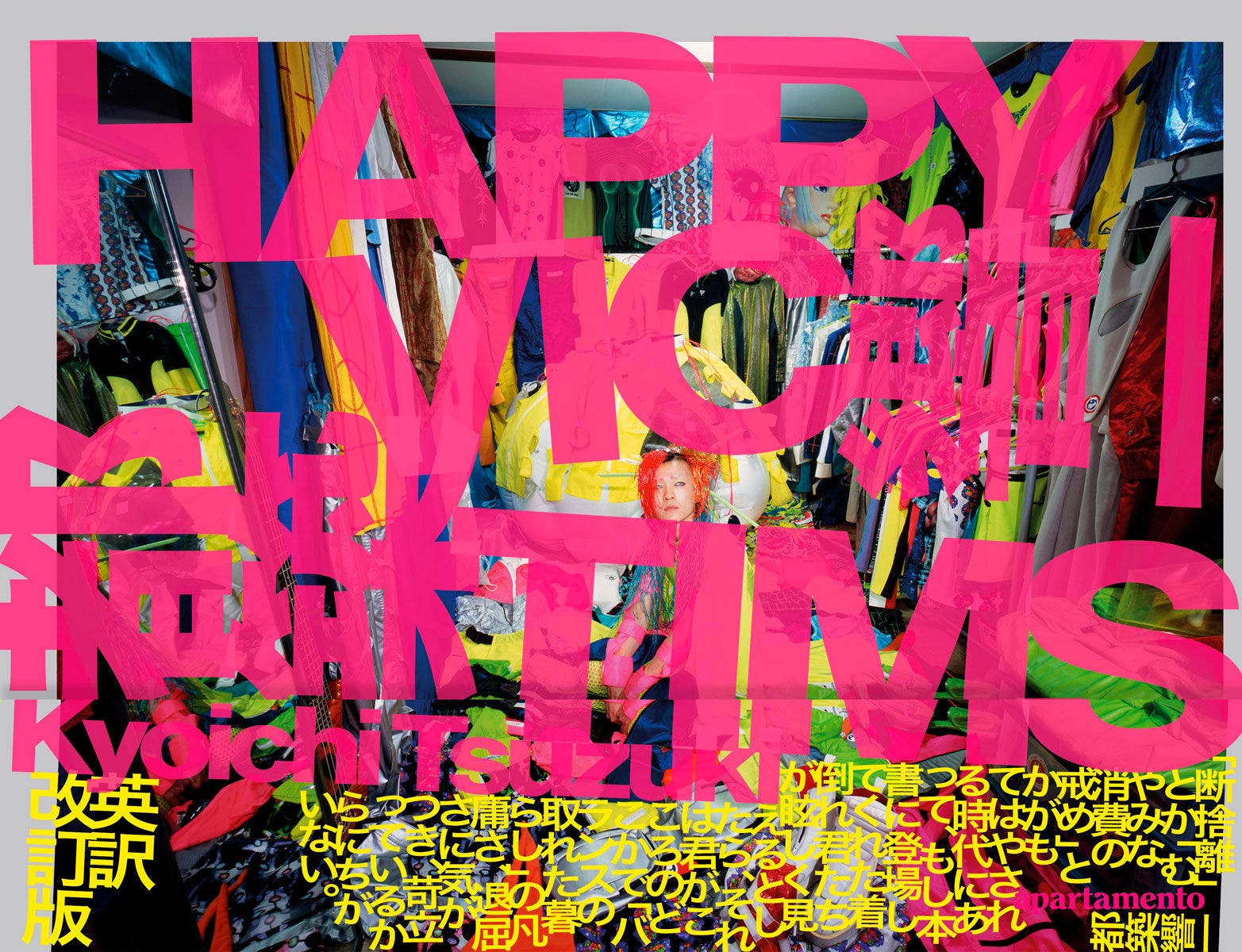
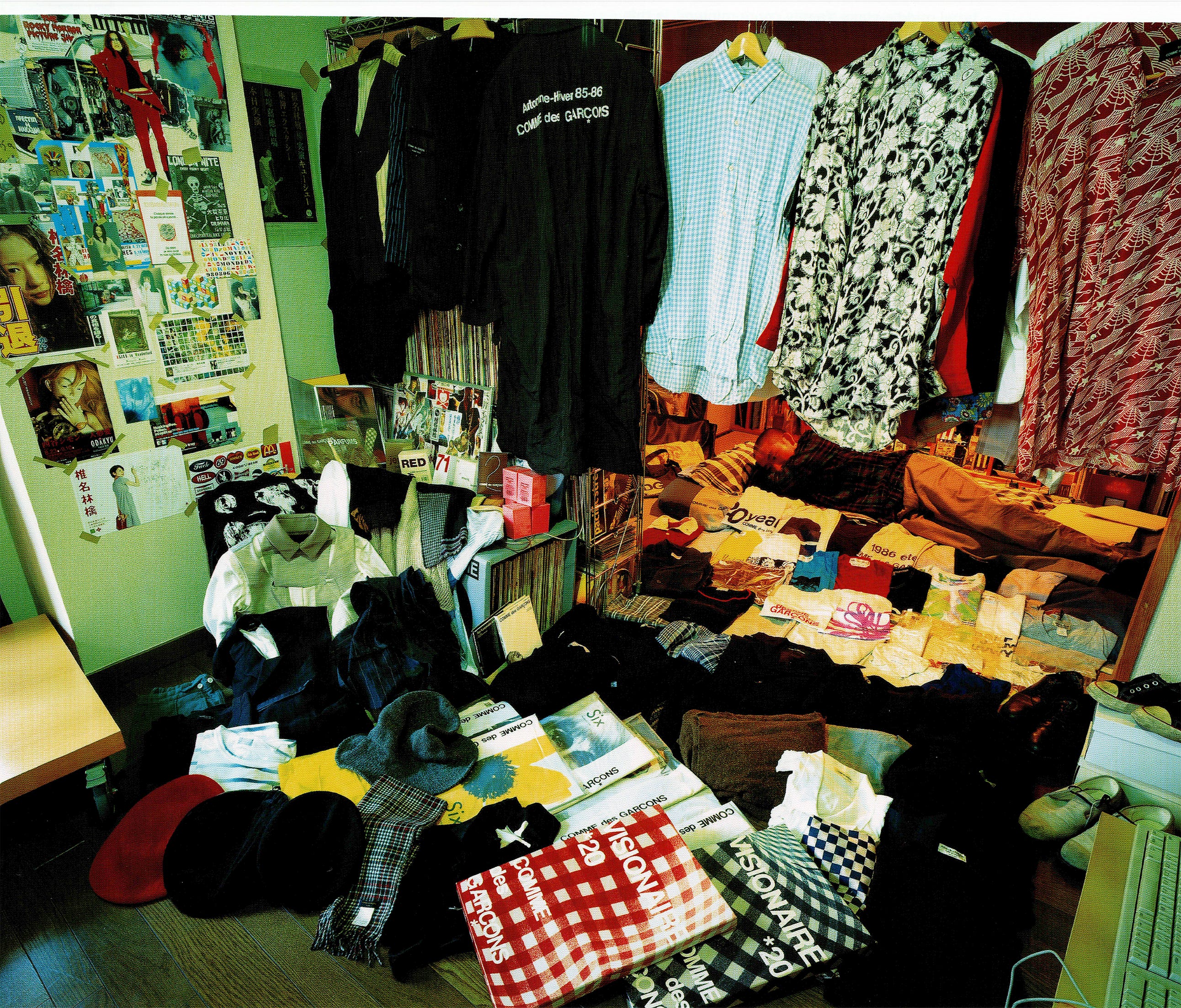
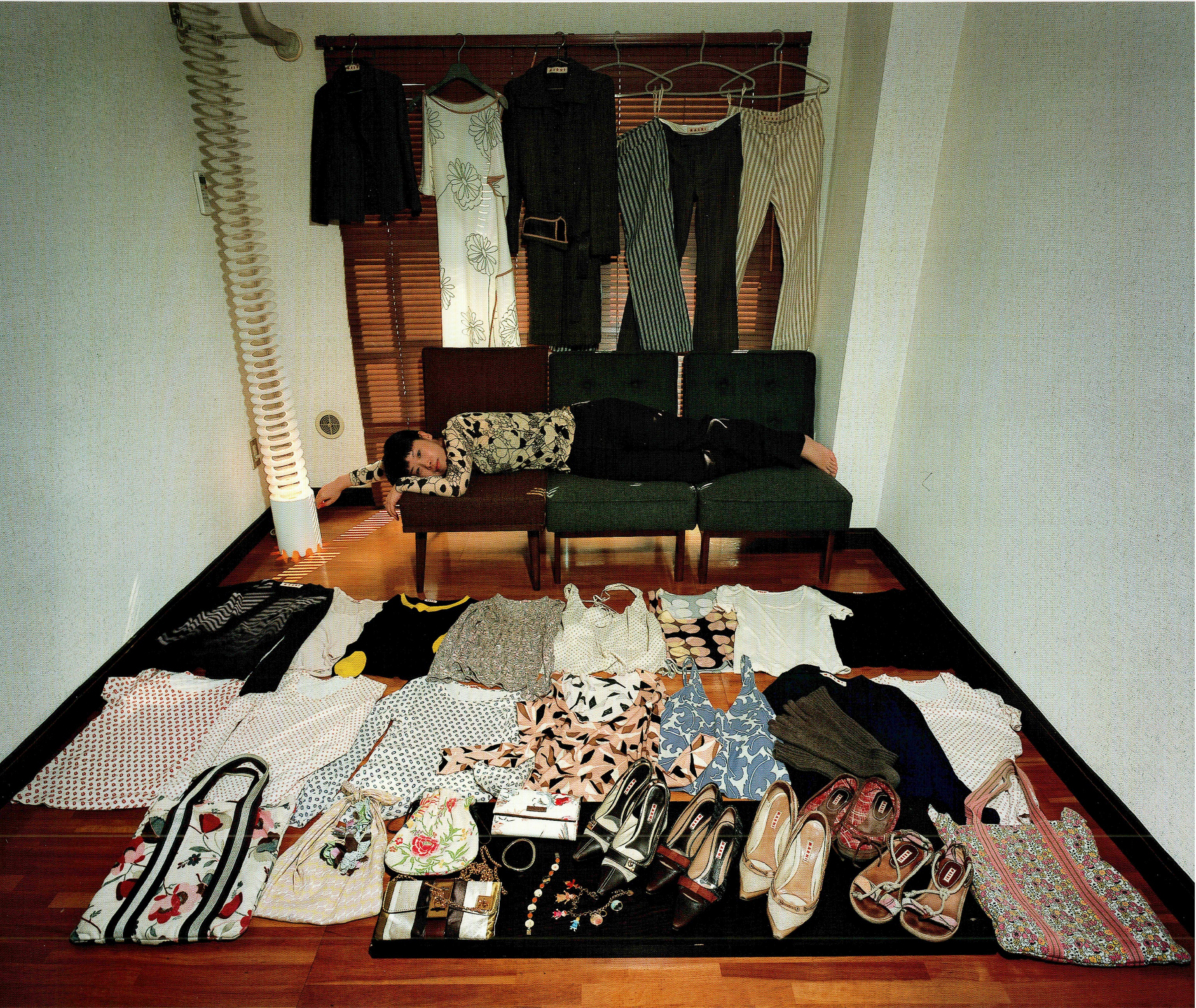
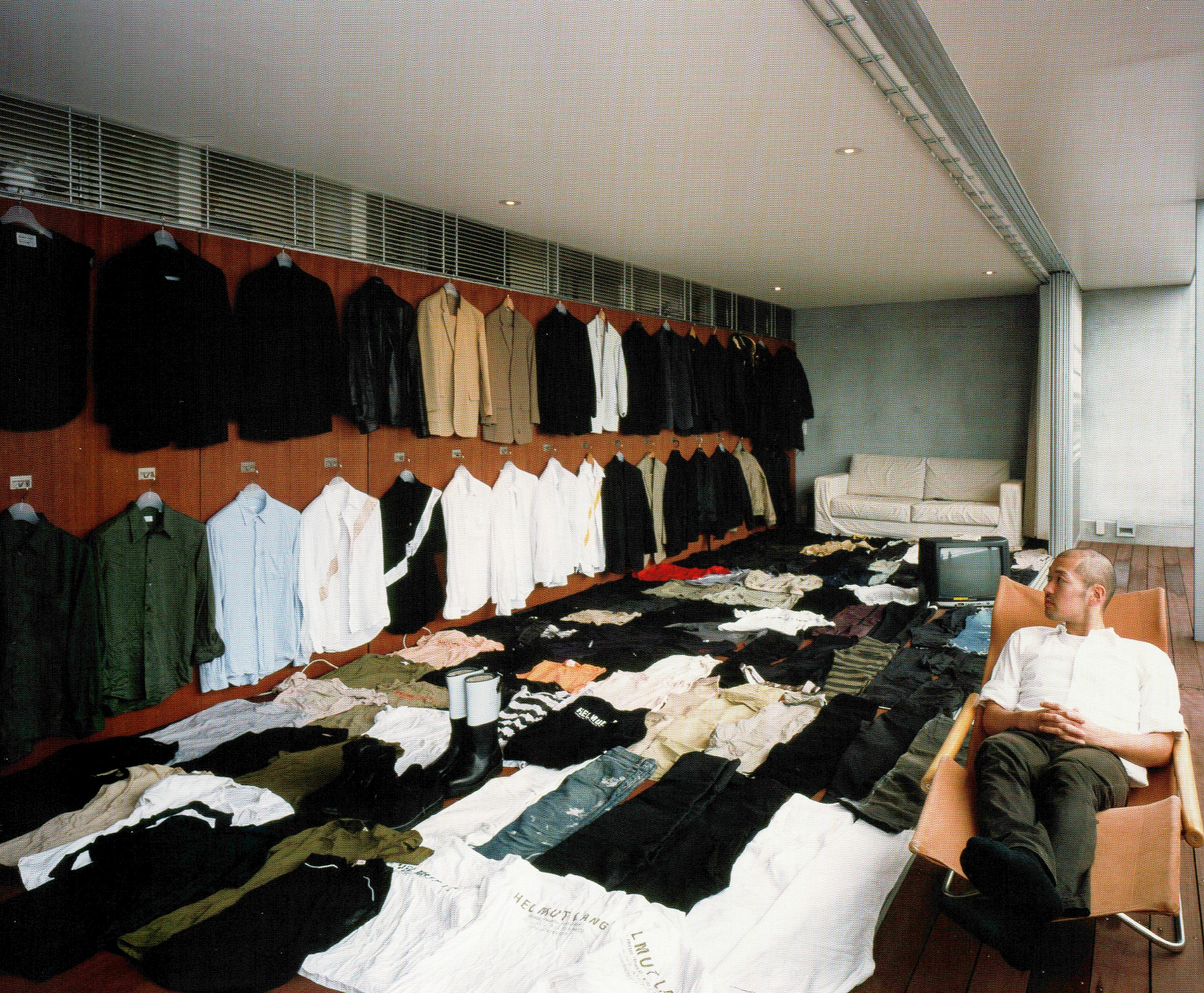
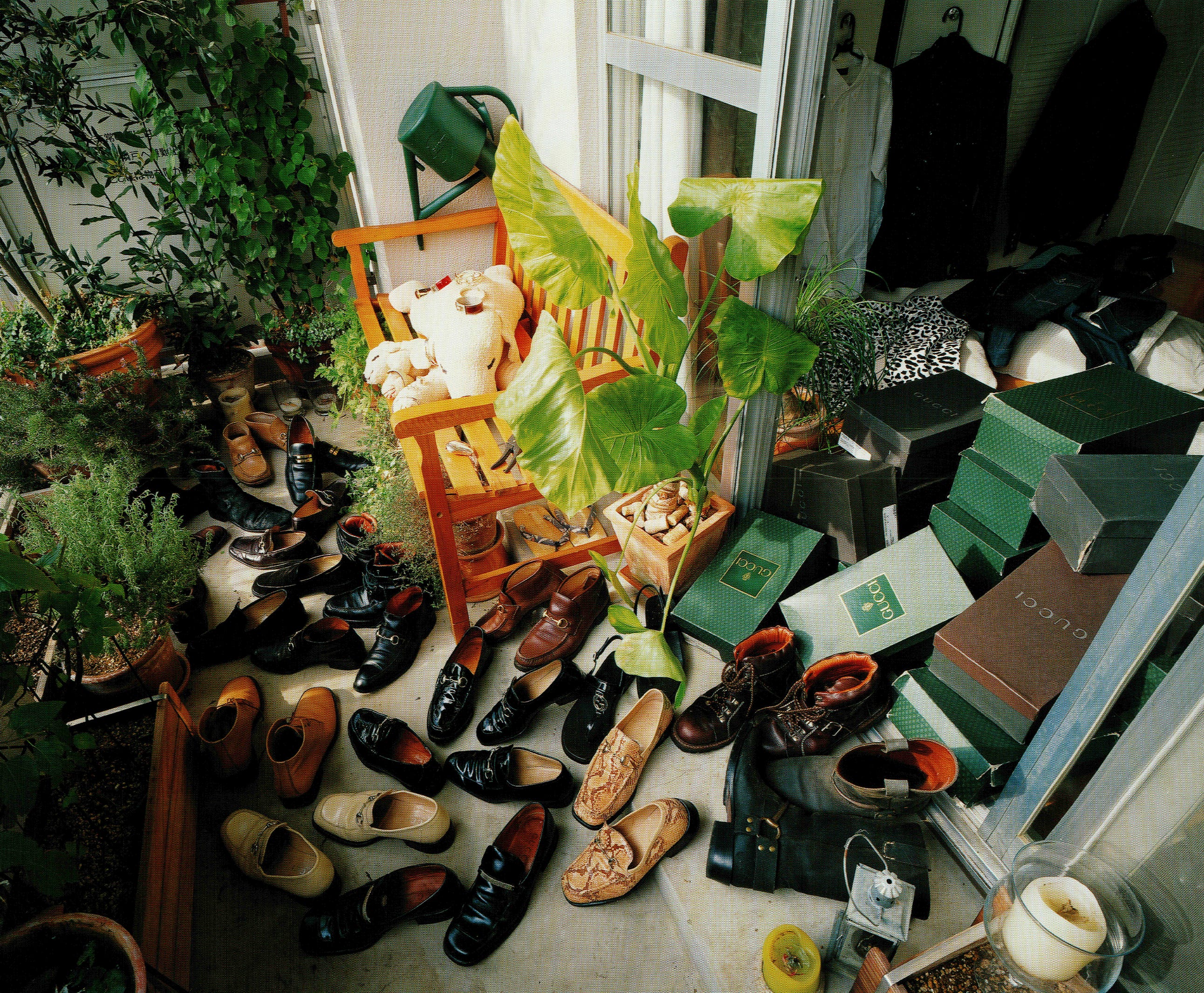
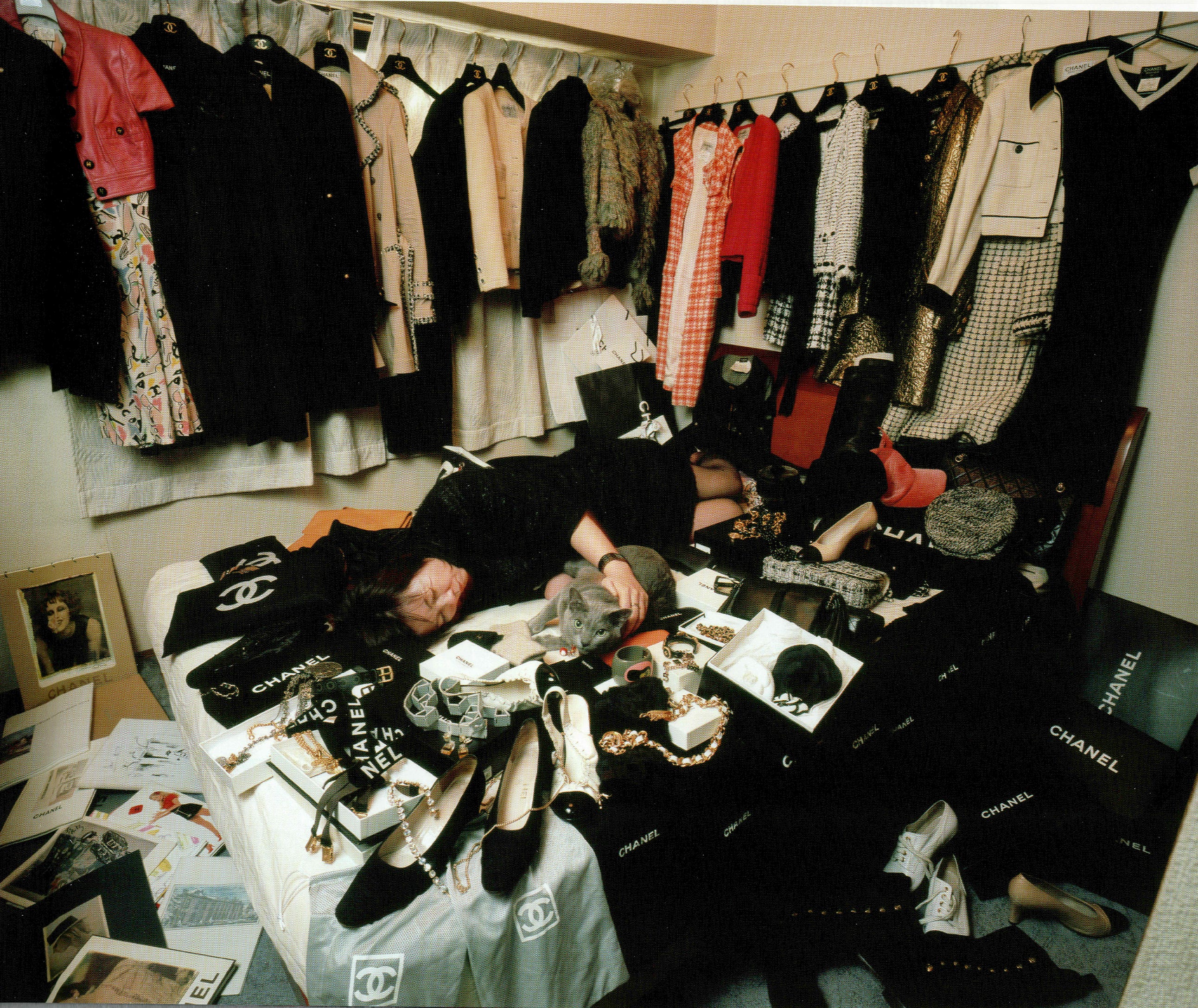
This thought came to me after reading Happy Victims, a photo book by Kyochi Tsuzuki that was first published in 2008. It’s been out of print for a while but has returned in a new edition in 2025. The photographs showcase the private homes of regular people who have dedicated and even sacrificed parts of their lives in order to collect specific designer brands—an obsession level that is pretty rare to see these days.
These photos were taken by Tsuzuki between April 1999 and August 2006, and were originally published in Ryuko Tsuhin, a Japanese fashion magazine.
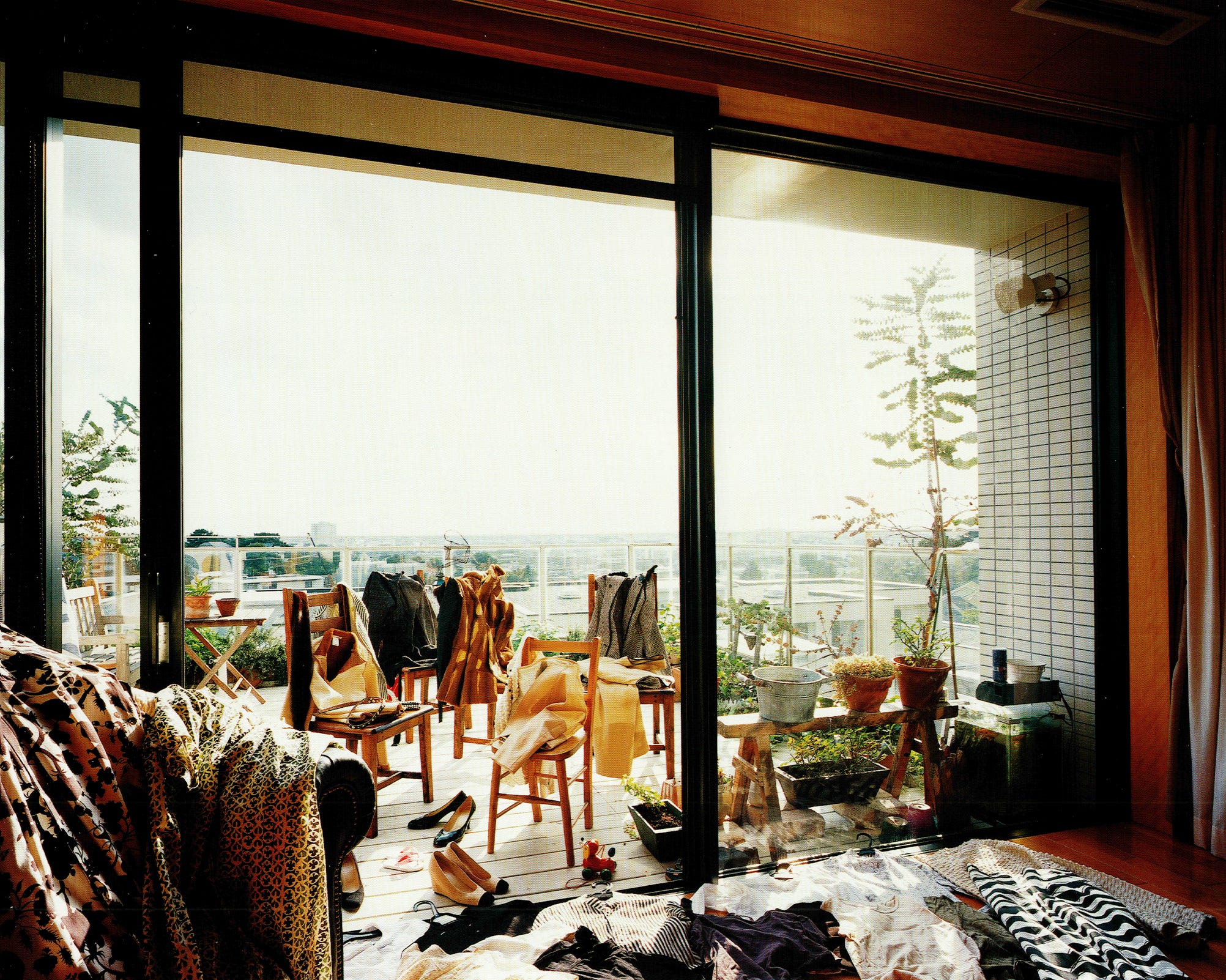
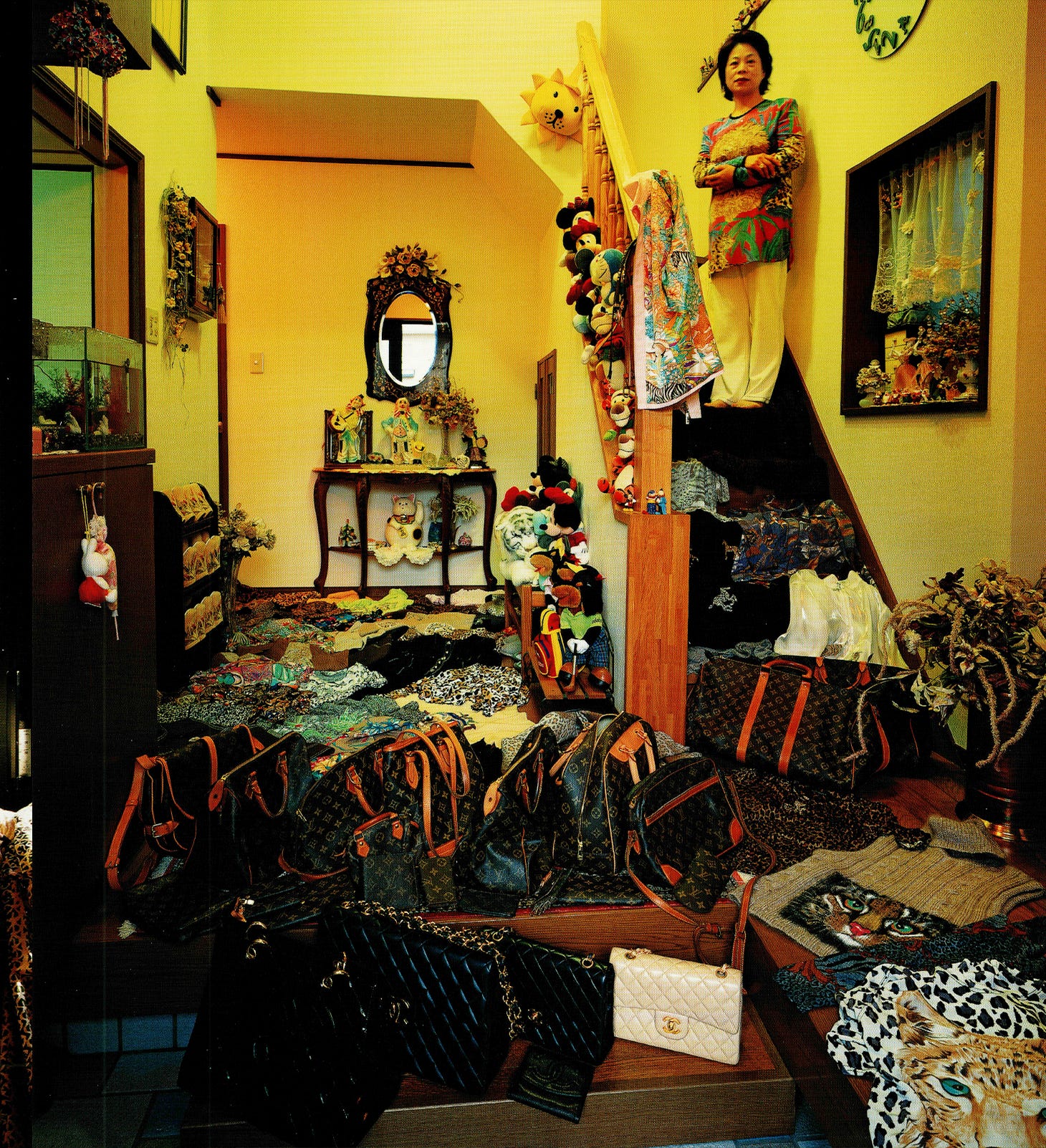
These collectors actively chose to trim their lifestyle down to the spaces they live in to dedicate all of their resources to collecting a specific designer.
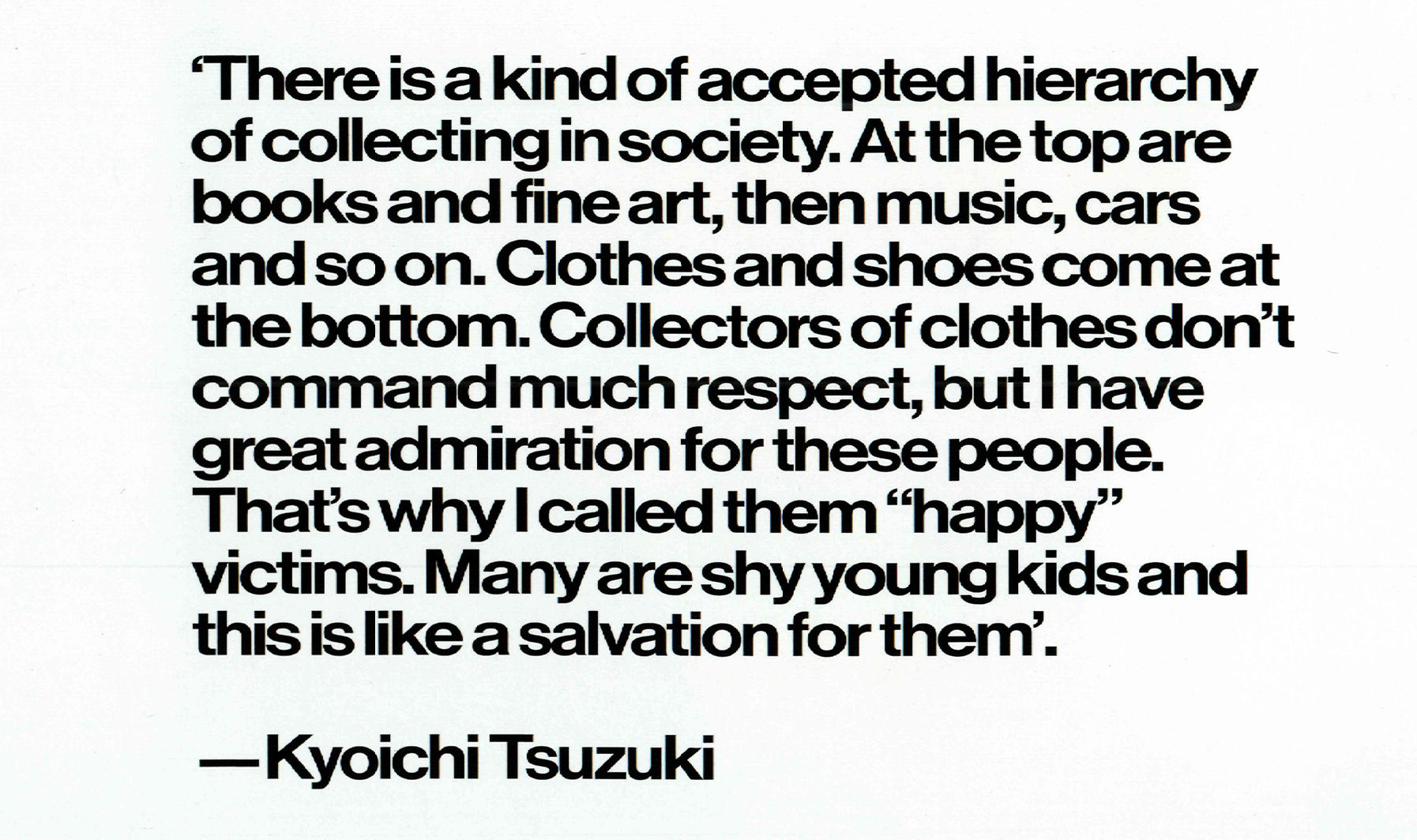
What I found extremely interesting about this book was in the foreword by Tsuzuki; “People like to sneer at high school girls who sell themselves to get money to buy Chanel goods or housewives who stuff Louis Vuitton handbags into the baskets of their mama-and-baby bicycles when they go food shopping. And yet the very same folks think nothing of the poor scholar who keeps buying and buying more books than anyone could possibly read in a lifetime, piling up so many volumes that the floor starts to tilt. They don’t laugh at DJ wannabes who scrimp and eat only convenience store snack foods while they buy stack upon stack of records. Only the objects of their passion differ, not the depth of intensity. Can such a hierarchy really exist in the world of collecting?”
Tsuzuki’s concept made me think about obsession in a different way. Certain collectors don’t get the same treatment as fashion enthusiasts might get, and that’s because society has deemed that being so hyper-specific about clothes comes off as pretentious or even a waste of time.
Maybe it’s because in today’s world that’s actually somewhat true. In some ways, obsession is now rooted in social status, and not the actual items anymore. You have people with enormous wealth buying into fashion with no actual passion for the clothes, but rather the social status it brings them.
Being obsessed with something today means something completely different than it did a few decades ago. Obsessing over a specific niche within a genre doesn’t feel as common anymore, and I think it’s because of how much information we’re constantly consuming. It’s easy to be swayed by ideas and concepts that make you feel like you are obsessed with a lot of things, when you’re actually not obsessed with anything at all.
The brands themselves are also a part of the reason why we might not see such dedicated fanbase anymore. Most brands are no longer focusing on creating worlds, but instead are just trying to generate the most hype and engagement, which then turns into sales. Of course, brands like Rick Owens and Yohji Yamamoto have stayed true to their ideology of world building and I think they are some of the last brands remaining that could still have that extreme level of fans.

So what am I writing all of this for? Well, I think this is all about observation and how people view obsession today.
Honestly, I’m one of those people who would say I’m “obsessed with fashion” but couldn’t give you a straight answer on what I’m actually obsessed with. Part of that is running this blog—I’m naturally trying to stay relevant to a wider audience so I share a lot of things I enjoy. Over time the net gets wider, and without realizing it, I go from being hyper-focused on specific niches to just being generally into a lot of stuff.
That’s not necessarily a bad thing, but reading Happy Victims made me aware of this in ways I haven’t thought about on a deeper level.
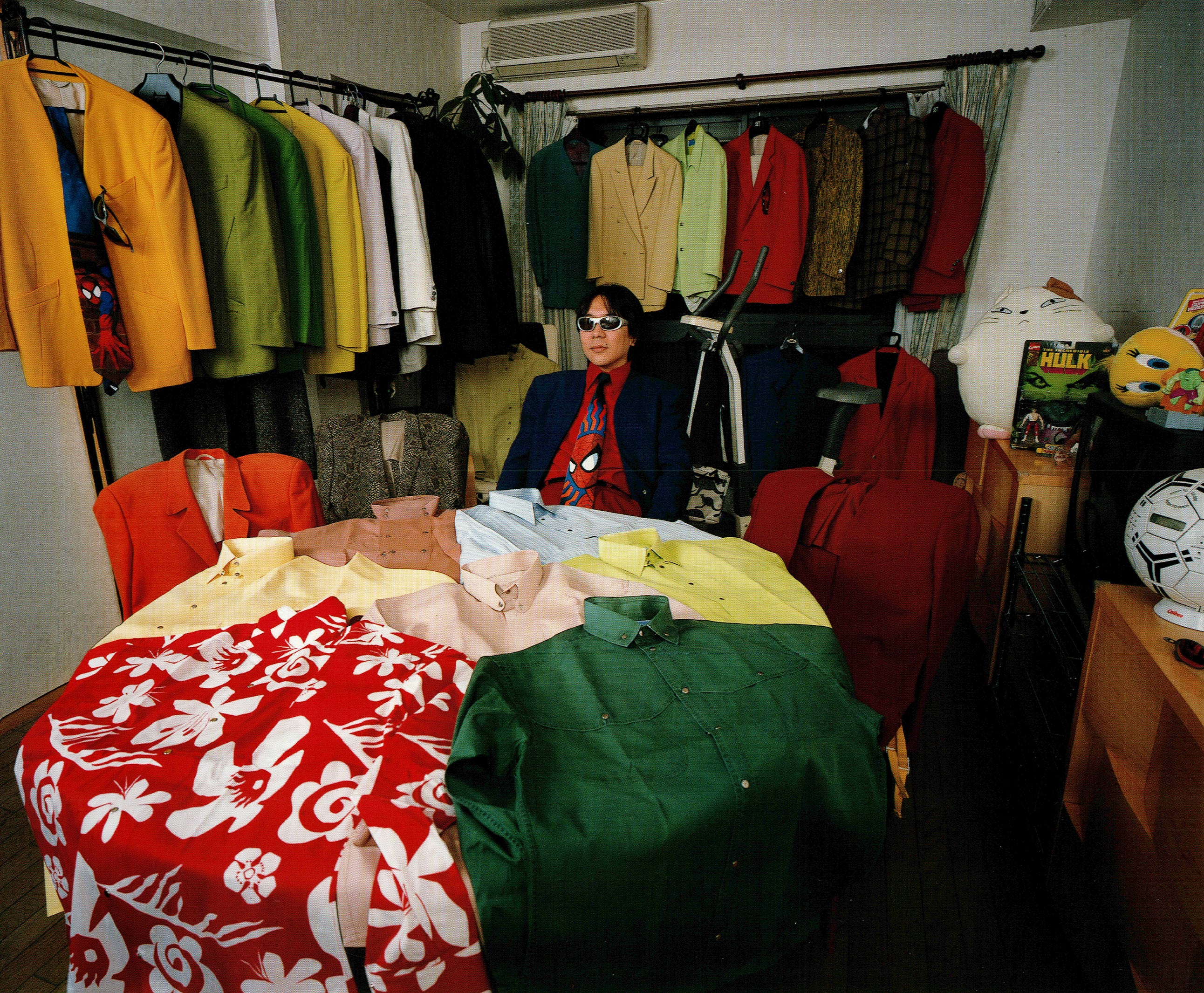
Besides being one of the most essential fashion books that any self-proclaimed fashion enthusiast should have in their collection, Happy Victims is a great way to think about how hyper-niche obsessions affect our style. What’s cool about the book is it features excerpts of the subjects’ daily life, giving you a look at what lives they lived while comparing that to the designer brand they are obsessed with.
The most impactful part of this book is the foreword by Tsuzuki and the introduction by Isabella Burley of Climax Books. These words set the tone and put you in a specific headspace to better understand the idea and subjects Tsuzuki chose to capture.
We’re always talking about style and how to develop it to ultimately make it our own, and I think that obsession is a key factor that helps you achieve that goal naturally; it’s a topic that I wrote about in a past letter on How to Develop Your Sense of Style.
If you don’t have the book, go get it. If you do, re-open it and dive back into it with the intention of having a specific obsession that could help you define your personal style. I think it’s awesome to be so into something, but not in a way where you choose to sacrifice other aspects of your life, of course.
The subjects in Happy Victims are diving into a world that was created by someone else, but through it, they end up finding themselves, even if it is an expense of everything else.
The re-print of Happy Victims is available to buy from Apartamento here.
Read next:


Funny timing of this article. For years I had been intentionally scratching the surface of a lot of things, opting to be a jack of all trades vs a master of one. I’ve been slowly trying to find my way more into the niche-ness of certain things, wine for example. Cool to read that someone else has been noticing a shift too.
Thanks for the post and intro to the book, I’d not heard of it. Could the less obsessive connection with fashion/ clothes brands be that culture is seemingly less about a time, place, music scene today - it’s the shared reference that carries weight. Or put another way, many iconic or timeless styles pull from an era or place that conjures something romantic or culturally
significant - when social media / swiping becomes the ‘point’ of culture, even beautiful pieces are only fabric deep - without the culture the clothes hang on, the depth of obsession is gone. Just a hypothesis .. interested in your take.